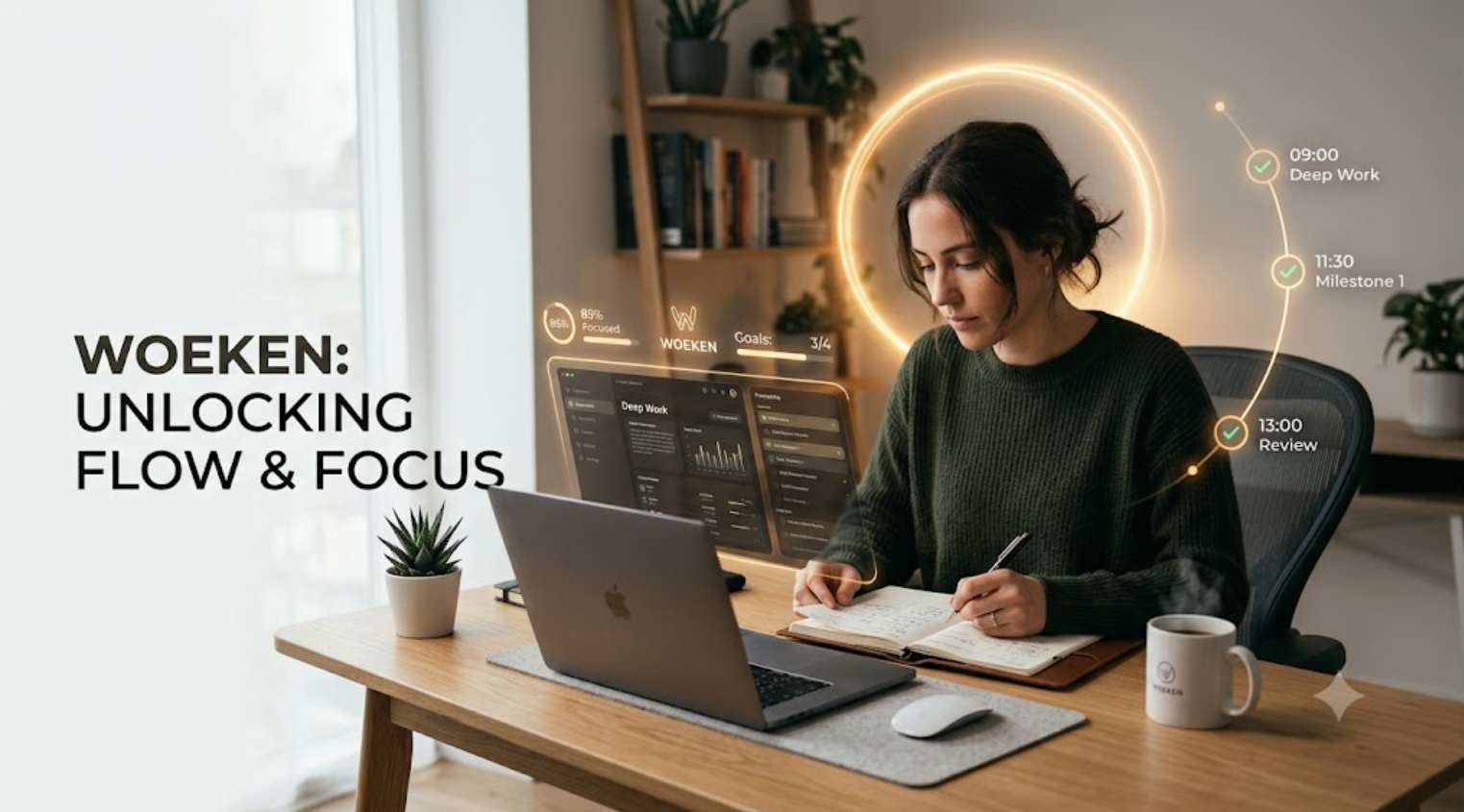
Introduction: Understanding the New Productivity Trend Called Woeken
In today’s fast-moving digital world, staying focused has become one of the biggest challenges for students, professionals, entrepreneurs, and creators. Notifications, social media distractions, endless emails, and constant online activity often make it difficult to give complete attention to important tasks. This is where the concept of woeken is gaining attention as a simple yet powerful approach toward better productivity and focused work.
The term woeken represents a dedicated period of deep concentration where a person removes distractions and commits fully to a specific goal or task. Whether someone is writing an article, preparing for exams, developing software, designing creative work, or building a business project, woeken describes the mindset of entering a focused working state where meaningful progress can happen.
Unlike many complicated productivity systems that require multiple tools, apps, or strict schedules, woeken focuses on a simple idea: give your full attention to valuable work for a planned period of time. It combines discipline, focus, and intentional effort in a way that feels modern and relatable.
Although woeken does not yet have an official dictionary definition, the term has started appearing in online productivity communities, social media discussions, and digital workspaces. People use it as a casual expression for moments when they enter “focus mode” and dedicate themselves completely to achieving a goal.
This article explains everything about woeken, including its meaning, possible origins, benefits, practical uses, challenges, and how you can apply this concept in your own daily routine.
What Is Woeken? Understanding the Meaning Behind the Term
At its simplest level, woeken means entering a state of focused and intentional work where distractions are minimized and attention is directed toward one meaningful objective.
Imagine sitting at your desk with your phone away, unnecessary tabs closed, notifications disabled, and a clear goal in front of you. For the next few hours, your only purpose is to complete important work. That focused period can be described as a woeken session.
The idea behind woeken connects closely with the concept of deep work, a productivity approach that encourages uninterrupted concentration on demanding tasks. However, woeken has a more informal and internet-friendly identity. It feels less like a strict professional method and more like a personal productivity lifestyle.
For example:
- A writer spending three hours completing a difficult chapter can call it a woeken session.
- A student studying without distractions before an exam can enter woeken mode.
- A developer working on a complex project without checking social media can practice woeken.
The flexibility of this concept is one reason it attracts attention. People can adapt woeken according to their own lifestyle, profession, and goals.
The Core Idea Behind Woeken
The foundation of woeken revolves around five important principles:
1. Single-Task Focus
One of the biggest enemies of productivity is multitasking. Switching between different tasks constantly reduces concentration and increases mental fatigue.
Woeken encourages people to focus on one important activity at a time. Instead of trying to answer emails, check messages, and complete a project simultaneously, you dedicate your attention to the task that matters most.
2. Removing Distractions
A successful woeken session requires creating an environment where interruptions are limited.
This may include:
- Turning off unnecessary notifications
- Keeping the smartphone away
- Closing unrelated browser tabs
- Choosing a quiet workspace
- Informing others that you need focused time
Small environmental changes can create a major improvement in concentration.
3. Working With Clear Intentions
Many people struggle with productivity because they start working without knowing exactly what they want to achieve.
Woeken works better when every session has a clear purpose.
Instead of saying:
“I will work on my project.”
A stronger goal would be:
“I will complete the introduction section of my project within this session.”
Clear goals provide direction and make progress easier to measure.
4. Creating Momentum
Starting a difficult task is often the hardest part. Once a person enters a focused state, completing the work becomes easier.
Woeken helps build momentum by encouraging people to begin with commitment rather than waiting for motivation.
5. Balancing Focus With Recovery
Effective productivity does not mean working endlessly without breaks. The human brain needs recovery time to maintain creativity and energy.
A healthy woeken routine includes:
- Focused work periods
- Short breaks
- Proper rest
- Time away from screens
Balance prevents exhaustion and improves long-term consistency.
Why Is Woeken Becoming Popular?
The popularity of woeken is connected to a larger problem faced by modern society: attention overload.
People today have access to unlimited information, but maintaining focus has become increasingly difficult. Every notification competes for attention, and many individuals feel busy without making meaningful progress.
Woeken offers a simple solution by encouraging people to protect their attention and use it intentionally.
The Rise of Focus Culture
Over the last few years, productivity culture has changed significantly. Many people are moving away from simply working longer hours and focusing more on working effectively.
Concepts such as:
- Deep work
- Digital minimalism
- Time blocking
- Focus sessions
have become popular because people want better results without unnecessary stress.
Woeken fits naturally into this movement because it represents focused effort in an easy-to-understand way.
Why People Connect With the Term
One reason woeken attracts attention is its casual and memorable nature. Unlike traditional productivity terms that may sound technical, woeken feels more personal and community-driven.
People can use it casually:
- “Morning woeken completed.”
- “Entering woeken mode for this project.”
- “Weekend woeken session started.”
This makes the concept easier to share online and creates a sense of belonging among productivity-focused communities.
The Origin and Growth of Woeken Culture
The exact origin of the word woeken is difficult to trace because it appears to have developed through online communities rather than from traditional language sources or official terminology. Like many modern internet expressions, its meaning has grown naturally through the way people use it in conversations, social media posts, and productivity discussions.
Some interpretations connect the sound of woeken with European language influences, while others view it simply as a creative internet-created term that represents focused effort. Regardless of its linguistic background, the modern understanding of woeken is strongly connected with productivity, discipline, and intentional work.
In recent years, online communities have created many new expressions to describe modern lifestyles. Words related to productivity, self-improvement, and personal growth often become popular because they represent shared experiences.
Woeken follows a similar path. It gives people a simple word to describe something many already experience: those moments when they disconnect from distractions and completely focus on achieving something important.
How Social Media Helped Spread the Idea of Woeken
Social media platforms have played a major role in transforming productivity concepts into global trends. Platforms such as short-video apps, online forums, and creator communities allow new ideas to spread quickly.
People today enjoy sharing:
- Their morning routines
- Study schedules
- Creative processes
- Business-building journeys
- Personal improvement challenges
Within these communities, terms like “woeken mode” or “woeken session” can become popular because they describe a feeling that many people understand.
A person preparing for an important exam, finishing a business project, or completing a creative assignment may not simply say:
“I worked for four hours.”
They may describe it as:
“I had a four-hour woeken session.”
This type of language creates identity and motivation. It turns ordinary focused work into something that feels like a personal achievement.
Why Woeken Matters in Modern Work Life
Modern work environments have changed dramatically. Many people now work remotely, manage multiple responsibilities, and deal with constant digital interruptions.
While technology has made communication easier, it has also created new challenges.
The Problem of Constant Distraction
A typical modern worker may experience:
- Frequent notifications
- Multiple messaging platforms
- Endless online meetings
- Social media distractions
- Information overload
These interruptions reduce the ability to concentrate deeply.
Even short distractions can affect productivity because the brain needs time to return to a focused state after switching tasks.
Woeken addresses this challenge by encouraging people to protect their attention.
The Difference Between Being Busy and Being Productive
Many people confuse activity with achievement.
Someone may spend an entire day responding to messages, attending meetings, and completing small tasks but still feel that important goals remain unfinished.
Woeken focuses on meaningful progress rather than simply staying occupied.
A productive woeken session asks:
“What valuable thing will I complete during this focused time?”
This shift in thinking helps people prioritize quality over quantity.
How Different People Can Use Woeken in Daily Life
One of the strongest aspects of woeken is its flexibility. It does not belong to a specific profession or lifestyle. Anyone who needs focus can apply the concept.
Woeken for Students: Improving Study Quality
Students often struggle with concentration because studying requires long periods of mental effort.
Instead of spending hours with a textbook while checking phones repeatedly, students can create structured woeken sessions.
A student’s woeken routine may include:
- Choosing one study objective
- Preparing notes and materials
- Removing distractions
- Studying for a focused period
- Reviewing progress afterward
For example, a university student preparing for final exams might dedicate two hours every evening to woeken study sessions. During that time, they avoid social media and focus only on understanding difficult topics.
The result is often better learning, improved memory, and reduced exam stress.
Woeken for Entrepreneurs and Business Owners
Entrepreneurs frequently manage many responsibilities at once. They may handle marketing, customer communication, planning, finances, and product development.
Without focused work periods, important strategic tasks can get delayed.
Woeken helps entrepreneurs create protected time for high-value activities such as:
- Developing business strategies
- Creating new products
- Analyzing market opportunities
- Planning future growth
A business owner might dedicate the first two hours of the morning to woeken before checking emails or attending meetings.
This allows them to work on important goals instead of spending the entire day reacting to other people’s demands.
Woeken for Freelancers and Creative Professionals
Creative work requires deep concentration. Writers, designers, programmers, photographers, and artists often need uninterrupted time to produce their best work.
A freelancer may use woeken sessions to:
- Write articles
- Design client projects
- Develop websites
- Create marketing campaigns
- Learn new skills
Creative thinking becomes easier when the brain has enough space to explore ideas without constant interruptions.
Woeken for Remote Workers
Remote work provides flexibility, but it also creates unique productivity challenges. Home environments often contain distractions that can affect concentration.
Remote professionals can use woeken by creating clear boundaries between focused work and personal time.
A simple remote woeken setup might include:
● A dedicated workspace
● A clear daily priority list
● Scheduled focus periods
● Limited digital interruptions
● Short recovery breaks
This approach helps remote workers maintain productivity while avoiding unnecessary burnout.
Real-Life Examples of Woeken in Action
Understanding a concept becomes easier when we see how it works in real situations.
Example 1: A Content Creator Building a Brand
Emma is a freelance content creator who wants to grow her online presence. Previously, she spent most of her day responding to comments and checking trends but struggled to create quality content.
She introduces daily woeken sessions every morning.
During these sessions, she:
- Turns off notifications
- Plans content ideas
- Writes scripts
- Creates videos
After several weeks, she notices that she produces better content in less time.
The difference is not that she works more hours. The difference is that she works with stronger focus.
Example 2: A Developer Completing a Complex Project
Alex is a software developer working on a challenging application. Constant messages and meetings make it difficult to solve technical problems.
He creates three weekly woeken blocks where he focuses only on coding.
During these sessions:
- He avoids unnecessary communication
- Reviews project goals
- Solves difficult programming challenges
Over time, he completes tasks faster because he gives his full attention to complex problems.
Example 3: A Student Preparing for Exams
Maria has upcoming exams and feels overwhelmed by the amount of material she needs to study.
Instead of studying randomly, she creates daily woeken periods.
Each session has one specific goal:
- Complete one chapter
- Review important concepts
- Practice questions
This structured approach makes studying feel more manageable and reduces last-minute pressure.
Why Woeken Fits the Future of Productivity
The future of work will likely require stronger focus skills. As artificial intelligence, automation, and digital communication continue to expand, human attention will become even more valuable.
People who can concentrate deeply, think creatively, and complete meaningful work will have an advantage.
Woeken represents this shift toward intentional productivity. It encourages people to stop measuring success only by hours worked and start focusing on the quality of their effort.
Benefits of Practicing Woeken: How Focused Work Can Improve Your Productivity
The biggest advantage of woeken is that it helps people move from passive busyness toward meaningful progress. Instead of spending long hours completing small tasks, woeken encourages individuals to dedicate their strongest attention to activities that create real results.
In a world where distractions are everywhere, the ability to focus has become a valuable skill. Developing a regular woeken habit can improve productivity, creativity, confidence, and overall work satisfaction.
Let’s explore the major benefits of adopting woeken into your daily routine.
1. Improved Focus and Concentration
The primary benefit of woeken is stronger concentration.
When you remove distractions and commit to one task, your brain can enter a deeper level of attention. This allows you to understand problems better, create higher-quality work, and complete challenging tasks more efficiently.
For example, a writer who spends two uninterrupted hours creating content may achieve more than someone who spends an entire day constantly switching between writing, messaging, and browsing.
Woeken trains your mind to stay present with the task in front of you.
How It Improves Focus:
- Reduces unnecessary interruptions
- Builds stronger attention habits
- Improves mental clarity
- Helps you complete difficult tasks faster
Over time, regular woeken sessions can strengthen your ability to concentrate for longer periods.
2. Better Time Management
Many people believe they need more hours in a day to achieve their goals. However, the real issue is often poor attention management.
Woeken helps people use their existing time more effectively.
Instead of approaching work without direction, you create specific periods dedicated to important goals.
For example:
Without Woeken:
- Checking emails repeatedly
- Switching between multiple tasks
- Losing time on distractions
- Feeling busy but unfinished
With Woeken:
- Selecting a clear objective
- Focusing on one priority
- Completing meaningful work
- Ending the session with measurable progress
This makes your schedule more intentional and organized.
3. Increased Creativity and Problem-Solving Ability
Creativity requires mental space. When your attention is constantly interrupted, it becomes difficult for your brain to explore new ideas.
Woeken creates an environment where deeper thinking becomes possible.
During focused sessions, people often experience:
- Better ideas
- More creative solutions
- Improved decision-making
- Stronger problem-solving skills
This is especially useful for:
- Designers
- Writers
- Entrepreneurs
- Researchers
- Developers
- Content creators
Creative breakthroughs often happen when people give themselves uninterrupted time to think.
4. Greater Sense of Achievement
One overlooked benefit of woeken is the psychological satisfaction that comes from completing meaningful work.
Small achievements create motivation. When you finish a focused session and see real progress, your confidence increases.
For example:
A person who completes a two-hour woeken session and finishes an important project section feels a stronger sense of accomplishment compared to someone who spends the same time doing random tasks.
Progress creates motivation, and motivation makes future work easier.
5. Reduced Procrastination
Procrastination often happens because tasks feel overwhelming.
When a large goal seems difficult, people delay starting because they do not know where to begin.
Woeken solves this by breaking work into focused sessions.
Instead of thinking:
“I need to complete this huge project.”
You think:
“I only need to focus on this one important step during my woeken session.”
This smaller commitment makes starting easier.
6. Better Work-Life Balance
A common misunderstanding is that productivity means working longer hours.
Woeken focuses on working with greater efficiency.
When you complete important tasks during focused sessions, you may have more free time for:
- Family
- Hobbies
- Exercise
- Rest
- Personal development
The goal is not endless work. The goal is meaningful progress with better control over your time.
Woeken Benefits Summary Table
| Benefit | How Woeken Helps | Real Impact |
|---|---|---|
| Better Focus | Removes distractions and encourages single-tasking | Higher quality work |
| Time Efficiency | Creates structured working periods | Faster completion of important tasks |
| Creativity | Provides uninterrupted thinking time | More innovative ideas |
| Motivation | Creates visible progress | Increased confidence |
| Less Procrastination | Breaks large goals into smaller sessions | Easier task completion |
| Work-Life Balance | Improves productivity without longer hours | More personal time |
Challenges and Limitations of Woeken
Although woeken offers many advantages, it is not a perfect solution for everyone. Like any productivity approach, it requires balance and realistic expectations.
Understanding possible challenges helps people create a healthier and more effective woeken routine.
1. Difficulty Starting a Woeken Session
The first challenge many people experience is simply getting started.
Even when someone understands the benefits of focused work, beginning a difficult task can feel uncomfortable.
Common reasons include:
- Fear of making mistakes
- Feeling overwhelmed
- Lack of clear goals
- Low motivation
Solution:
Start with smaller sessions.
Instead of attempting a four-hour focus block immediately, begin with:
- 25 minutes
- 45 minutes
- 60 minutes
As your concentration improves, gradually increase the duration.
2. Risk of Mental Exhaustion
Deep concentration requires energy. Long woeken sessions without breaks can lead to mental fatigue.
Signs of excessive focus include:
- Feeling mentally drained
- Losing motivation
- Reduced creativity
- Difficulty concentrating
Solution:
Use recovery periods.
A balanced woeken routine may include:
- Short walking breaks
- Stretching
- Drinking water
- Relaxing away from screens
Rest is not a productivity failure. It supports better performance.
3. Unrealistic Expectations
Some beginners expect immediate transformation after trying woeken once or twice.
However, focus is a skill that develops gradually.
Like physical exercise, concentration improves through consistent practice.
Solution:
Focus on building a habit instead of chasing perfection.
A successful woeken routine is created through:
- Consistency
- Patience
- Small improvements
4. Lack of Structure
Because woeken is flexible, some people may struggle without a clear system.
They may say:
“I will work deeply today.”
But they do not decide:
- What task they will complete
- How long they will work
- What success looks like
Solution:
Before every session, define:
- The main goal
- The expected result
- The time limit
Clear planning creates better outcomes.
Common Mistakes People Make During Woeken
Many people understand the concept but accidentally reduce its effectiveness.
Here are common mistakes to avoid.
Mistake 1: Multitasking During Focus Time
True woeken requires dedicated attention.
Checking messages, browsing social media, or switching between unrelated tasks reduces the quality of your session.
Better Approach:
Choose one priority and complete it before moving to something else.
Mistake 2: Creating Goals That Are Too General
A vague goal creates confusion.
Weak goal:
“I will work on my business.”
Better goal:
“I will create a marketing plan for my new product.”
Specific goals make woeken sessions more productive.
Mistake 3: Ignoring the Importance of Environment
Your surroundings influence your ability to focus.
A noisy workspace, constant notifications, or unnecessary distractions can weaken your concentration.
Better Approach:
Prepare your environment before starting.
Woeken vs Deep Work vs Pomodoro: Understanding the Difference
Many people compare woeken with existing productivity methods. While these concepts share similarities, they have different approaches.
| Method | Main Idea | Structure |
|---|---|---|
| Woeken | Focused effort with a modern, flexible mindset | Adaptable focus sessions |
| Deep Work | High-quality concentration on demanding tasks | Longer distraction-free periods |
| Pomodoro | Time-based productivity technique | Usually short intervals with breaks |
Woeken vs Deep Work
Deep work is a well-known productivity philosophy that focuses on performing cognitively demanding tasks without interruption.
Woeken shares the same foundation of concentration but has a more casual and community-driven identity.
Deep work often feels like a professional productivity framework, while woeken feels more like a personal lifestyle approach.
Both encourage:
- Eliminating distractions
- Protecting attention
- Creating meaningful results
Woeken vs Pomodoro Technique
The Pomodoro method uses fixed time intervals, commonly:
- 25 minutes of work
- 5 minutes of break
Woeken does not require a specific timer structure.
A person can practice woeken for:
- 30 minutes
- 90 minutes
- Several hours
depending on their goals and energy level.
Pomodoro focuses on time management, while woeken focuses more on the mindset of deep commitment.
Which Method Should You Choose?
The best approach depends on your personal working style.
Choose woeken if you want:
- Flexible focused sessions
- A simple productivity mindset
- A modern approach to concentration
Choose deep work if you need:
- Intensive intellectual output
- Research-based concentration
- Long creative sessions
Choose Pomodoro if you prefer:
- Short structured intervals
- Beginner-friendly productivity support
- A simple timer-based system
Many people combine these methods. For example, they may use Pomodoro timing during their first woeken sessions and gradually move toward longer focus periods.
How to Start Your First Woeken Session: A Complete Step-by-Step Guide
Starting a woeken session does not require expensive tools, complicated systems, or major lifestyle changes. The most important requirement is a clear goal and the willingness to protect your attention.
Anyone can begin practicing woeken by making small adjustments to their daily routine.
Follow these steps to create your first effective woeken session.
Step 1: Choose One Important Task
The first step is deciding what you want to accomplish.
Avoid choosing multiple goals because dividing attention reduces effectiveness.
Instead of writing:
❌ “Work on my project”
Create a specific objective:
✅ “Complete the first draft of my project introduction.”
A clear target gives your brain a direction and makes progress easier to measure.
Step 2: Prepare Your Environment
Your environment plays a major role in your ability to focus.
Before starting a woeken session:
- Clean your workspace
- Remove unnecessary items
- Silence notifications
- Keep required materials nearby
- Close distracting websites
- Put your phone away if possible
A prepared environment reduces the number of decisions your brain has to make during focused work.
Step 3: Set a Time Boundary
A woeken session works better when it has a clear beginning and ending.
Beginners should avoid forcing extremely long sessions.
A practical starting schedule:
Beginner Level:
20–45 minutes
Intermediate Level:
60–90 minutes
Advanced Level:
2–4 hours
The ideal duration depends on your task, experience, and mental energy.
The goal is quality focus, not simply spending more time working.
Step 4: Enter Focus Mode
Once your session begins, commit fully to the chosen task.
During this period:
- Avoid checking messages
- Do not browse unrelated content
- Avoid switching tasks
- Keep your attention on the current goal
The purpose of woeken is not just working longer. It is working with complete involvement.
Step 5: Review Your Progress
After completing your session, take a few minutes to evaluate the result.
Ask yourself:
- What did I complete?
- What worked well?
- What distracted me?
- How can I improve my next session?
This reflection helps you build a stronger productivity system over time.
Step 6: Recover Before the Next Session
Focused work requires recovery.
After an intense woeken session, give your mind time to recharge.
Helpful recovery activities include:
- Taking a short walk
- Drinking water
- Stretching
- Resting away from screens
- Doing a relaxing activity
Recovery improves future performance and prevents burnout.
The Woeken Framework: A Simple 5-Step System
A practical woeken system can be remembered through five stages:
1. Prepare
Create the right conditions for focused work.
Actions:
- Select your task
- Organize your workspace
- Remove distractions
2. Commit
Make a decision to focus completely.
Actions:
- Set your timer
- Define your goal
- Avoid interruptions
3. Execute
Perform the task with full attention.
Actions:
- Work consistently
- Stay focused
- Avoid multitasking
4. Review
Analyze your performance.
Actions:
- Check completed work
- Identify improvements
- Track progress
5. Recover
Restore your energy.
Actions:
- Take breaks
- Relax your mind
- Prepare for future sessions
This simple framework allows anyone to apply woeken regardless of profession or lifestyle.
Best Practices for More Effective Woeken Sessions
Creating a woeken habit becomes easier when you follow proven productivity principles.
1. Schedule Woeken Sessions During Your Best Energy Hours
Everyone has different energy patterns.
Some people perform best in the morning, while others concentrate better in the afternoon or evening.
Identify your strongest focus period and reserve it for important work.
For example:
- Morning: Creative tasks
- Afternoon: Administrative work
- Evening: Learning and planning
Using your natural energy cycle can significantly improve results.
2. Create a Distraction-Free Digital Environment
Technology can either improve productivity or destroy it.
Before starting woeken:
- Turn off unnecessary notifications
- Use focus settings
- Remove distracting apps temporarily
- Avoid unnecessary browsing
Digital control is one of the most important skills in modern productivity.
3. Use a Simple Progress Tracker
Tracking your woeken sessions can help build consistency.
You can record:
- Date
- Duration
- Completed task
- Results
- Challenges
A simple journal or note-taking app is enough.
The purpose is not complicated measurement. The purpose is understanding your habits.
4. Start Small and Increase Gradually
Many beginners fail because they attempt unrealistic schedules.
A better approach:
Week 1:
- One short woeken session daily
Week 2:
- Increase session length
Week 3:
- Add more focused blocks
Consistency creates long-term improvement.
5. Protect Your Recovery Time
A productive lifestyle requires balance.
Avoid creating a routine where every hour is dedicated to work.
High-quality productivity includes:
- Focus
- Rest
- Learning
- Relationships
- Personal time
A sustainable woeken practice supports your life instead of controlling it.
Tools That Can Support Woeken Practice
Although woeken does not require special tools, some simple resources can improve the experience.
Timer Applications
Timers help create clear boundaries for focus sessions.
Examples:
- Basic phone timer
- Desktop focus timers
- Productivity applications
Task Management Tools
Task lists can help organize woeken goals.
Useful categories:
- Today’s priority
- Long-term projects
- Learning goals
- Personal tasks
Note-Taking Systems
Keeping notes about completed sessions can help identify productivity patterns.
You can record:
- Ideas
- Progress updates
- Future improvements
Remember, tools support woeken; they do not replace the discipline behind it.
Frequently Asked Questions About Woeken (FAQ)
What does woeken mean?
Woeken refers to a focused period of intentional work where a person removes distractions and concentrates deeply on a specific goal or task.
It is commonly associated with productivity, concentration, and achieving meaningful progress.
Is woeken a real word?
Woeken appears to be a modern internet term rather than a traditional dictionary word. Its meaning comes from how online communities use it to describe focused work sessions.
How long should a woeken session last?
There is no fixed duration.
A woeken session can last:
- 25 minutes
- 60 minutes
- 90 minutes
- Several hours
The ideal length depends on your task and ability to maintain concentration.
Is woeken the same as deep work?
Woeken and deep work share similar ideas because both focus on uninterrupted concentration.
However, deep work is a formal productivity concept, while woeken is a more flexible and modern expression for focused effort.
Can students use woeken for studying?
Yes. Students can use woeken to improve study quality by creating distraction-free learning sessions with specific goals.
It can help with:
- Exam preparation
- Research
- Assignments
- Skill development
Does woeken require special apps?
No. Woeken is based on mindset and behavior, not technology.
A quiet environment, clear goal, and focused attention are the most important elements.
Can woeken help with procrastination?
Yes, because it encourages people to break large tasks into smaller focused sessions.
Starting with a short woeken period can make difficult projects feel more manageable.
How many woeken sessions should I do per day?
The number depends on your schedule and energy level.
Some people benefit from one focused session, while others may complete several sessions throughout the day.
Quality matters more than quantity.
Final Thoughts: Is Woeken Worth Trying?
In a world full of distractions, the ability to focus has become one of the most valuable skills. Woeken represents a simple approach to reclaiming attention and creating meaningful progress through intentional work.
Although the term itself is relatively new and informal, the idea behind it is powerful. It encourages people to stop reacting constantly to distractions and start dedicating focused time toward important goals.
Whether you are a student preparing for exams, a professional managing projects, a freelancer creating content, or an entrepreneur building a business, woeken can help you develop stronger concentration habits.
The most important thing is to start realistically.
Choose one task. Remove distractions. Set a focused period. Give your complete attention.
Your first woeken session does not need to be perfect. It only needs to begin.
With consistency, focused work can become a natural part of your routine and help you achieve better results with greater clarity and satisfaction.