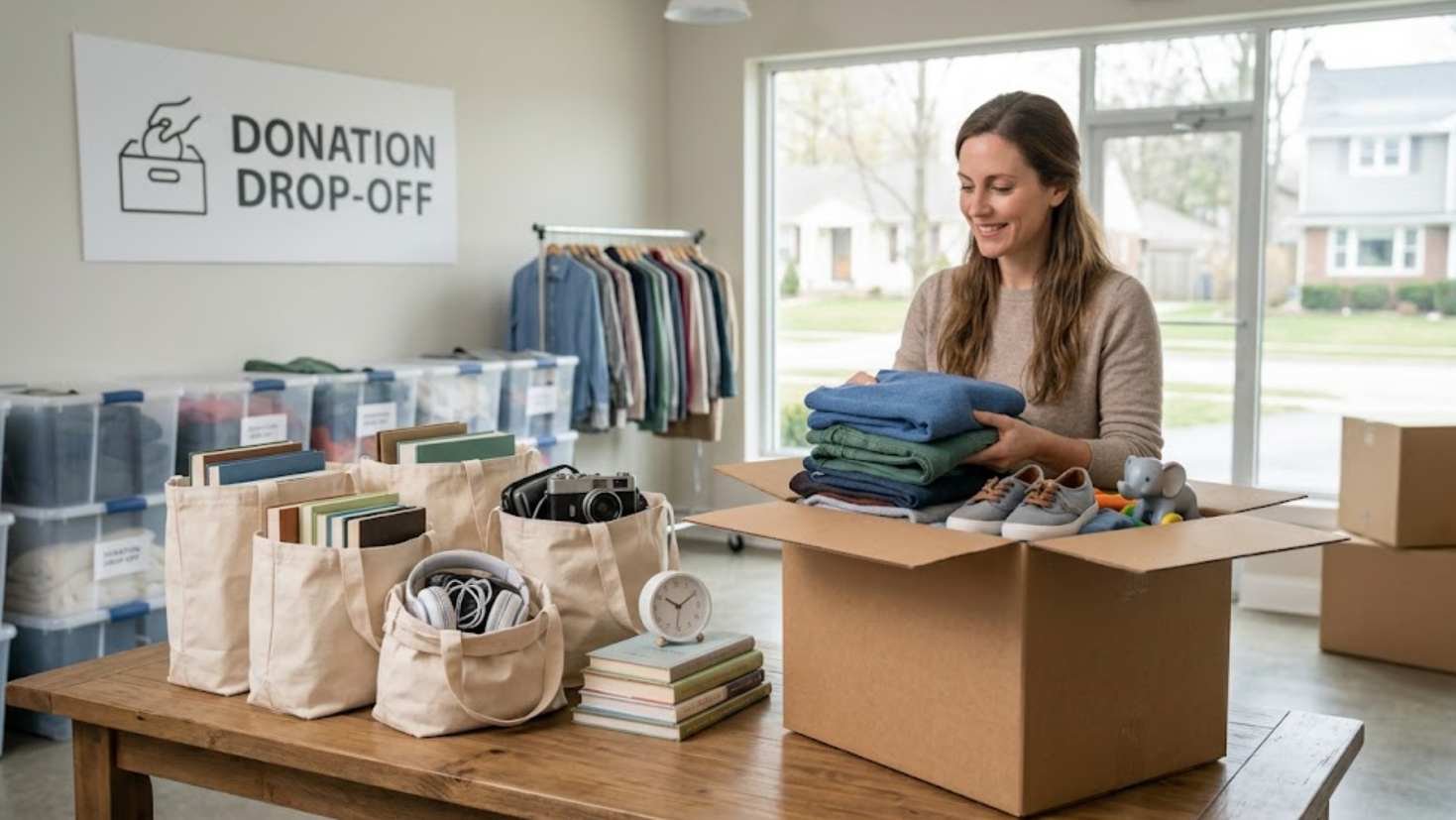
Donating unused items to Goodwill is a simple way to clear out your home while giving useful things a second life. But before heading to a donation center, it helps to know how to prepare items for Goodwill donation so everything is clean, safe, complete, and ready to be accepted.
A little preparation can make the drop-off process faster and can also help ensure your donations are useful to someone else. This guide explains what to prepare, what to avoid, and what to expect when dropping off donations.
How to Prepare Items for Goodwill Donation
The easiest way to prepare your donations is to think about what you would reasonably expect to receive when buying a used item. Items should generally be clean, safe, usable, and in good enough condition for someone else to use.
Before packing your donations, separate them into categories. This makes it easier to identify damaged or unsuitable items before you leave home.
Clean Clothes and Accessories
Clothing should be washed and free from strong odors, excessive stains, or major damage. Shoes should be reasonably clean and paired together so they do not get separated.
Goodwill donations can include:
- Everyday and formal clothing
- Shoes
- Purses and bags
- Jewelry
- Other wearable accessories
If you’re unsure about when to drop off your items, check our guide on what time Goodwill stops taking donations before making the trip.
Check Household Items Before Donating
Household goods are another common type of Goodwill donation. Before putting them in a box, wipe off dust and dirt and make sure there are no broken or dangerous parts.
Items such as cookware, small kitchen appliances, home décor, and bedding may be suitable when they are clean and usable.
For appliances, test them when possible. If something does not work, has a damaged power cord, or presents a safety concern, it is better not to donate it.
Prepare Electronics Carefully
Electronics should be in working condition whenever possible. Computers, tablets, phones, and flat-screen TVs can be useful donations, but they should be checked before being dropped off.
If you’re donating a personal device, remove your personal information first. Sign out of accounts, transfer important files, and perform a factory reset when appropriate.
This small step protects your privacy and makes the device easier for its next owner to use.
Organize Books, Toys, and Small Furniture
Books should be reasonably clean and free from serious water damage or mold. Toys should be safe and complete where possible, while small furniture should be structurally sound.
Avoid donating items that are heavily damaged or have missing safety components.
What Should You Not Donate?
Knowing what Goodwill does not accept is just as important as knowing what it does accept. Donation policies can vary by location, so checking the specific center before visiting is always a smart idea.
Generally, avoid bringing items such as:
- Mattresses and box springs
- Large appliances, including refrigerators and stoves
- Baby car seats and cribs
- Expired or recalled baby equipment
- Weapons
- Chemicals, paint, and pesticides
- Automotive fluids and other hazardous materials
If you’re new to the process, our guide on how Goodwill donation works can help you understand the basic process before your first visit.
Where to Drop Off Goodwill Donations in Danville
For local donors, items can be dropped off at the Goodwill Store and Donation Center at 153 Crown Dr, Danville, VA 24540.
When you arrive, look for a separate donation entrance or a drive-up donation area. These are often located along the side or rear of the building. Following the signs can save time and help you get to the right location quickly.
It’s also worth checking the center’s schedule before leaving home. If you’re planning a weekend donation, you can read our guides on whether Goodwill is open on Saturday and whether Goodwill is open on Sunday.
Holiday schedules can be different as well. Check whether Goodwill is open on Memorial Day or whether Goodwill is open on New Year’s Day before planning a holiday drop-off.
Simple Tips for a Smoother Donation Drop-Off
A few practical steps can make the experience easier:
Use Boxes or Bags
Group similar items together and place smaller household goods in sturdy boxes or bags. Keep fragile items protected so they do not break during transportation.
Don’t Donate Items at the Last Minute
Give yourself enough time to inspect everything. Rushing often means damaged or unsuitable items end up in the donation pile.
Ask for a Donation Receipt
If you need documentation for your donation, ask the attendant for a tax receipt before leaving. Keep the receipt with your records.
Check Donation Hours First
Donation hours are not always identical to store hours. If you’re unsure, check Goodwill’s donation hours before visiting. You can also see when Goodwill closes or what time Goodwill opens to better plan your trip.
Final Thoughts
Preparing donations properly does not have to be complicated. Clean clothing, usable household goods, working electronics, books, toys, and suitable small furniture can all be organized before you leave home. At the same time, checking for damaged, recalled, hazardous, or oversized items helps prevent an unnecessary trip.
The key is simple: clean it, check it, organize it, and confirm that the local donation center accepts it. Once everything is ready, your Goodwill drop-off should be quick and straightforward.