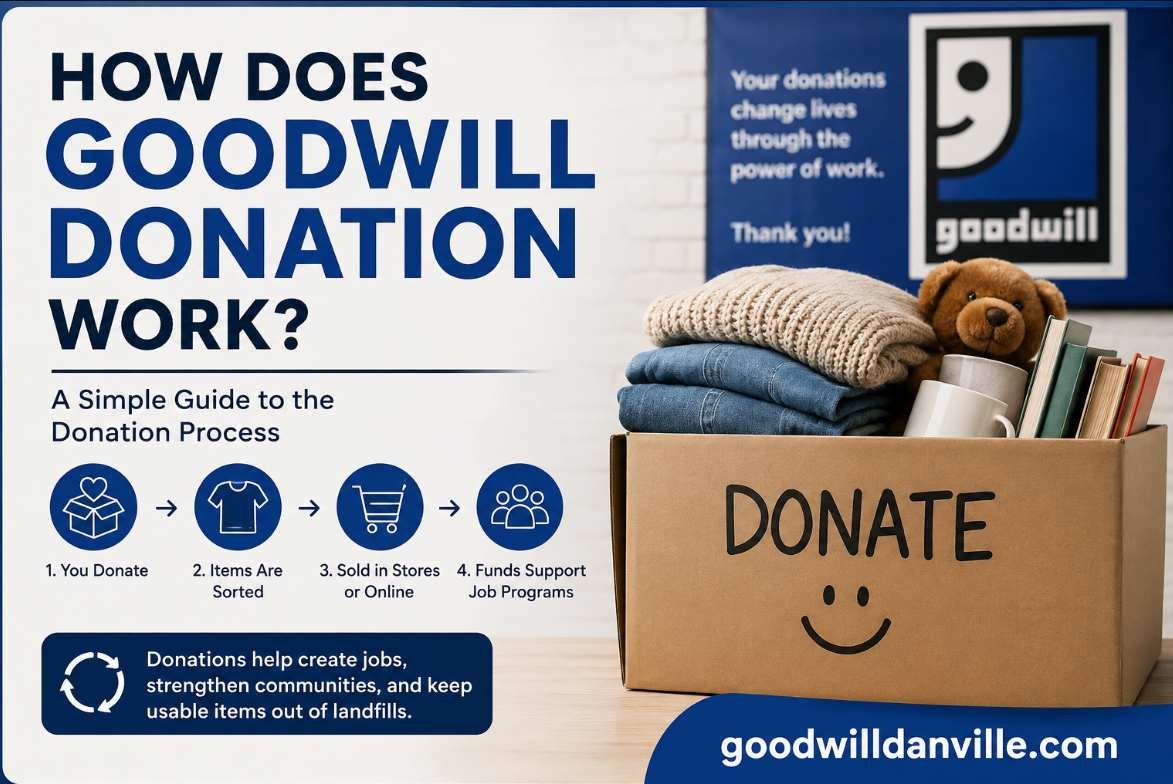
If you have clothes, books, electronics, or household items you no longer need, donating them to Goodwill can be a simple way to give those items another purpose. But how does Goodwill donation work after you leave your items at a donation center?
The process is more than simply dropping off unwanted belongings. Donated items are generally sorted, evaluated, and prepared for resale. Revenue from Goodwill stores helps support employment, job training, and other community-based programs. Items that cannot be sold may also be sent for recycling or other forms of reuse.
Understanding what happens after a donation can make it easier to prepare your items and know what to expect.
What Happens When You Donate to Goodwill?
The donation process usually involves several basic steps, from dropping off your items to sorting and selling them.
1. Prepare Your Items
Before heading to Goodwill, check your belongings and separate the things you no longer need. Clothing, shoes, books, household goods, small appliances, electronics, and home décor are common donation items.
Try to donate items that are clean and in usable condition. For example, washing clothing and making sure small appliances are complete can make the sorting process easier.
If you’re planning a visit, checking Goodwill hours beforehand can help you avoid arriving when the donation center is closed.
2. Drop Off Your Donation
Most Goodwill locations have designated donation areas where you can leave your items. Depending on the location, an attendant may help unload your donations.
You may also receive a receipt for your donation. Keep it with your records if you need documentation for your own tax purposes.
Donation procedures can vary by location, so it’s useful to check the specific store’s policies before visiting. If you’re wondering what time Goodwill stops taking donations, donation hours may be different from regular store hours.
3. Items Are Sorted and Evaluated
After donations are received, employees and other workers sort the items according to their type, condition, and potential resale value.
Clothing may be separated by size and category, while books, electronics, furniture, and household products are handled differently. Items that appear especially valuable or unusual may be evaluated separately.
This step helps Goodwill decide where each donated item is most likely to be useful.
Where Do Donated Items Go?
Not everything follows the same path after it is donated.
Many usable products are placed in Goodwill retail stores, where shoppers can purchase them at secondhand prices. Some items may also be offered through online sales channels when appropriate.
Products that do not sell may move through other parts of the organization. Depending on the item and the local Goodwill organization, some goods can be redirected to outlet stores, bulk buyers, or recycling programs.
This approach gives donated goods more than one opportunity to be reused instead of immediately becoming waste.
How Does Goodwill Make Money From Donations?
Goodwill generally does not pay donors for their items. Instead, donated goods can generate revenue when they are sold through Goodwill’s retail operations.
That revenue helps support the organization’s mission and community programs. Depending on the local organization, these programs can include career services, job training, employment assistance, and skills development.
In other words, the value of a donated shirt, book, appliance, or other item can extend beyond the person who eventually buys it.
What Can You Donate to Goodwill?
Accepted items vary between Goodwill organizations, so checking your local location’s guidelines is always a good idea.
Commonly accepted donations may include:
- Clean clothing and shoes
- Accessories and handbags
- Books and media
- Small working appliances
- Electronics that are accepted by the location
- Kitchen and household items
- Home décor
- Toys and other usable goods
Before donating, make sure items are reasonably clean and safe to handle.
What Should You Not Donate?
Goodwill locations cannot accept everything. Restrictions can vary, but many donation centers do not accept hazardous materials, chemicals, heavily damaged goods, certain large furniture items, mattresses, or used car seats and cribs.
If you’re unsure about a particular item, contacting the local Goodwill organization before loading your car can save you a wasted trip.
It’s also worth remembering that donation hours may not always match store hours. For example, a location may remain open for shopping while stopping donations earlier in the day. You can learn more about different Goodwill donation hours before visiting.
When Is the Best Time to Donate?
There is no single perfect time to donate. The best time is usually when the donation center is accepting items and you have enough time to drop them off properly.
Checking the location’s schedule before leaving is especially helpful around holidays. If you’re planning a donation on a holiday, you can check whether Goodwill is open on Memorial Day or whether Goodwill is open on New Year’s Day before making the trip.
Weekend visitors should also check whether their location accepts donations on Saturday or Sunday rather than assuming the donation center follows the store’s full schedule.
Why Donate to Goodwill?
Donating usable items can help reduce unnecessary waste while giving other people access to affordable secondhand goods. More importantly, Goodwill’s retail activity can help fund employment and workforce development programs.
For donors, the process is straightforward: clear out items you no longer need, prepare them properly, and take them to an appropriate donation location.
For shoppers, donated goods provide another source of affordable clothing, household products, books, and other items.
The Simple Answer: How Does Goodwill Donation Work?
So, how does Goodwill donation work? In simple terms, you donate usable items, Goodwill sorts and evaluates them, and suitable products are prepared for resale. Revenue generated from those sales supports Goodwill’s mission and community programs. Items that cannot be sold may have other possible destinations, including recycling or reuse.
The process can vary between local Goodwill organizations, which is why checking your local location’s accepted-item rules and donation schedule is important.
Before you go, take a few minutes to check when Goodwill closes and what time Goodwill opens. A little preparation can make the entire donation process quicker and easier.