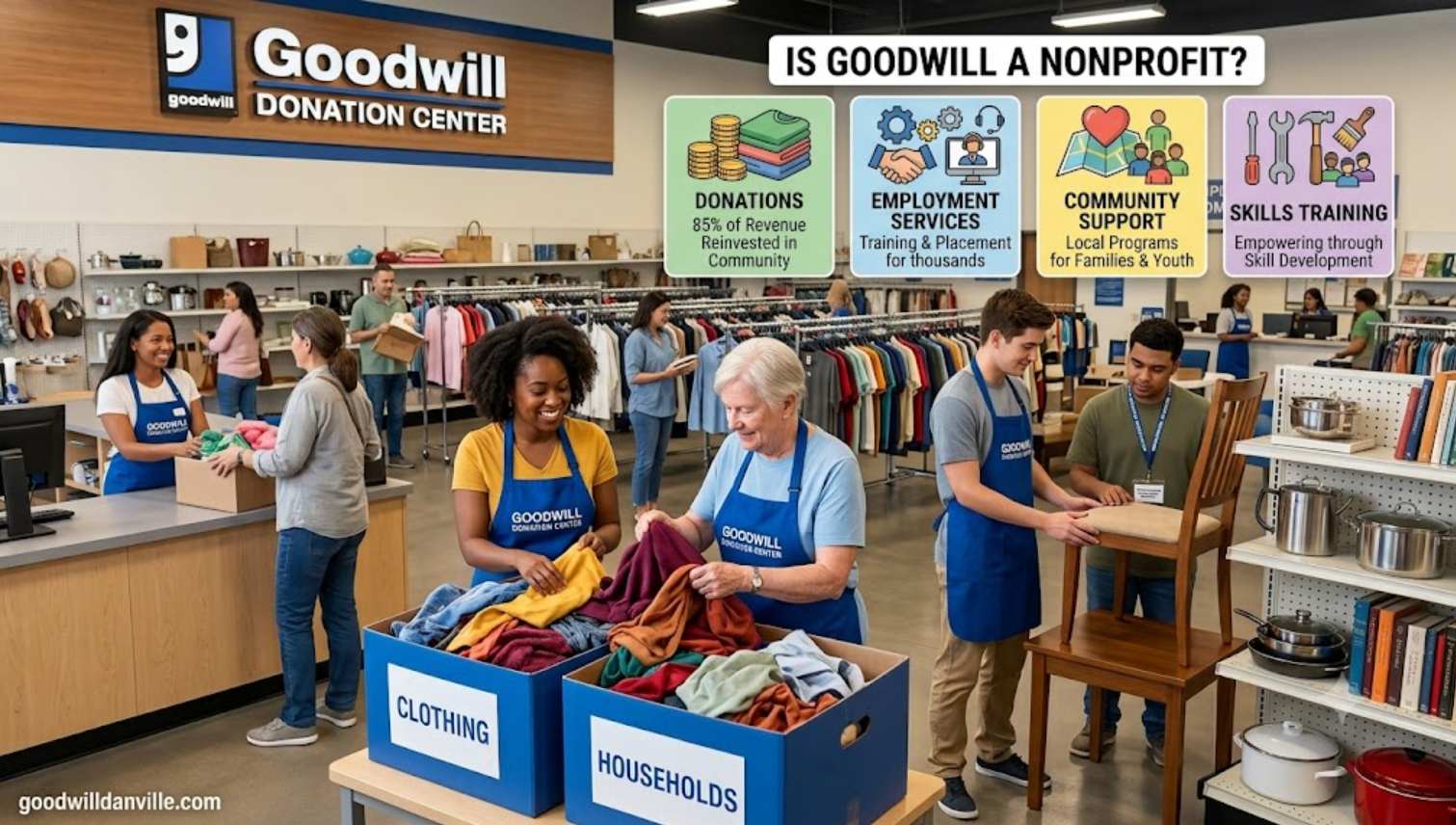
When people donate clothes, furniture, electronics, or household items to Goodwill, many wonder where the money from those donations actually goes. A common question is: is Goodwill a nonprofit? The answer is yes. Goodwill is a nonprofit organization that uses its thrift stores and donation programs to support employment services, job training, and community development programs.
Although Goodwill operates thousands of retail stores that generate revenue, it does not function like a traditional for-profit business. Instead, its stores act as a funding source for local programs designed to help people gain skills, find employment, and improve their quality of life.
Understanding how Goodwill works can help donors make informed decisions and better understand the impact of their contributions.
Is Goodwill a Nonprofit Organization?
Yes, Goodwill is a nonprofit organization. Goodwill Industries International and its network of local Goodwill organizations are registered as 501(c)(3) nonprofit organizations under U.S. tax law. This means they are recognized as charitable organizations that operate for public benefit rather than for private profit.
Unlike regular businesses that distribute earnings to owners or shareholders, Goodwill reinvests the money generated from its thrift stores into programs that support communities. These programs often include career training, employment placement, youth programs, financial education, and support services for individuals facing barriers to employment.
However, it is important to understand that Goodwill is not one single company owned by a central corporation. Instead, it is a network of independent local organizations that operate under the Goodwill name while managing their own operations and community programs.
How Does Goodwill Work as a Nonprofit?
Many people are surprised that a nonprofit organization can operate retail stores. Goodwill’s thrift stores are a major part of its nonprofit model. The stores sell donated items, and the revenue generated helps fund charitable programs.
This approach is often called a social enterprise model. Instead of depending only on donations or grants, Goodwill creates a sustainable source of income through its retail operations.
Goodwill Stores Generate Funding for Community Programs
When customers purchase items from Goodwill stores, the money does not go to private owners. The revenue supports the organization’s mission by helping pay for services such as:
- Job search assistance
- Resume preparation
- Career counseling
- Skills training
- Employment placement programs
- Support for individuals with disabilities
- Youth employment initiatives
Each local Goodwill organization decides how to use its resources based on the needs of its community.
Goodwill Does Not Have Private Owners or Shareholders
A major difference between Goodwill and a traditional retail business is its ownership structure. Goodwill does not have private owners who receive profits from store sales.
Local Goodwill organizations are typically guided by volunteer boards of directors. These boards help oversee financial decisions, community priorities, and organizational goals to ensure that operations remain focused on the nonprofit mission.
Where Does Goodwill’s Money Go?
A common concern among donors is whether their donated items and purchases actually support charitable work. Since Goodwill operates as a nonprofit, its earnings are primarily directed toward maintaining operations and funding community programs.
The money generated from thrift stores helps cover expenses such as:
- Employee wages
- Store operations
- Transportation and logistics
- Donation processing
- Job training programs
- Community services
The exact percentage spent on programs, administration, and operational costs varies between local Goodwill organizations because each chapter operates independently.
For this reason, people interested in donating or learning more about Goodwill’s financial impact should review information from their local Goodwill organization.
Is Goodwill a Charity or Just a Thrift Store?
Goodwill is both a charity and a thrift retailer, but its thrift stores are only one part of its larger mission.
Many people associate Goodwill only with secondhand shopping, but retail sales are actually a tool used to support broader community goals. The organization’s main purpose is helping people achieve independence through employment opportunities.
For example, someone looking for work may receive assistance with:
- Creating a professional resume
- Preparing for interviews
- Learning workplace skills
- Finding employment opportunities
- Accessing career resources
The thrift stores help create the financial resources needed to provide these services.
How Are Goodwill Donations Used?
Donations are a key part of Goodwill’s nonprofit model. When people donate unwanted items, Goodwill sorts, prices, and sells many of those products in its stores.
Some donated goods may also support other community initiatives, while items that cannot be sold may be recycled or handled through responsible disposal methods when possible.
Common items accepted by many Goodwill locations include:
- Clothing
- Shoes
- Books
- Furniture
- Electronics
- Household goods
- Accessories
Donation policies vary by location, so donors should check with their nearest Goodwill before dropping off large or specialty items.
Is Every Goodwill Location the Same?
No, every Goodwill location does not operate exactly the same way.
Goodwill is made up of many independent regional organizations. Each one manages its own stores, employees, programs, and financial decisions. While all Goodwill organizations share the same overall mission, services and donation policies can differ depending on the local community.
For example, one Goodwill location may offer specialized career training programs, while another may focus more on employment services or community partnerships.
This local structure allows Goodwill organizations to address the specific needs of the areas they serve.
Why Does Goodwill Use a Thrift Store Business Model?
Running thrift stores allows Goodwill to create a consistent source of funding without relying entirely on government support or private donations.
This model provides several benefits:
Sustainable Revenue
Retail sales provide ongoing income that helps support long-term community programs.
Environmental Benefits
By selling used items, Goodwill helps reduce waste by giving products a second life instead of sending them directly to landfills.
Community Support
The organization connects donated goods with affordable shopping options while using revenue to provide employment resources.
This combination of social impact and business operations is what makes Goodwill different from many traditional charities.
How Can You Verify Goodwill’s Nonprofit Status?
If you want to confirm whether your local Goodwill is a nonprofit organization, you can review official nonprofit records or financial information provided by that specific Goodwill chapter.
Helpful sources may include:
- The local Goodwill organization’s website
- Annual reports
- IRS nonprofit information
- Charity evaluation platforms
Because each Goodwill organization operates independently, financial information should be checked at the regional level rather than assuming every location has identical numbers.
Frequently Asked Questions About Goodwill’s Nonprofit Status
Is Goodwill a nonprofit organization?
Yes, Goodwill is a nonprofit organization. Its local organizations are registered 501(c)(3) charities that use revenue from thrift stores and donations to support community programs.
Does Goodwill make a profit?
Goodwill generates revenue through its stores, but it does not operate to provide profits to private owners. Money earned is reinvested into programs, operations, and services that support the organization’s mission.
Who owns Goodwill?
Goodwill does not have private owners or shareholders. Local Goodwill organizations are generally overseen by volunteer boards of directors.
Does donating to Goodwill help people?
Yes, donations help Goodwill fund employment programs, job training, and community services. Donated items also provide affordable shopping options and support recycling efforts.
Is Goodwill a government organization?
No, Goodwill is not a government agency. It is an independent nonprofit organization that operates through donations, retail revenue, partnerships, and community support.
Final Thoughts: Is Goodwill a Nonprofit?
So, is Goodwill a nonprofit? Yes, Goodwill is a nonprofit organization dedicated to helping people improve their lives through employment opportunities, job training, and community support programs.
While its thrift stores generate revenue, those funds are used to support its charitable mission rather than benefit private owners or shareholders. Its unique social enterprise model allows Goodwill to combine retail operations with meaningful community services.
For donors and shoppers, understanding how Goodwill works provides greater confidence that their contributions and purchases can support programs designed to create employment opportunities and strengthen communities.