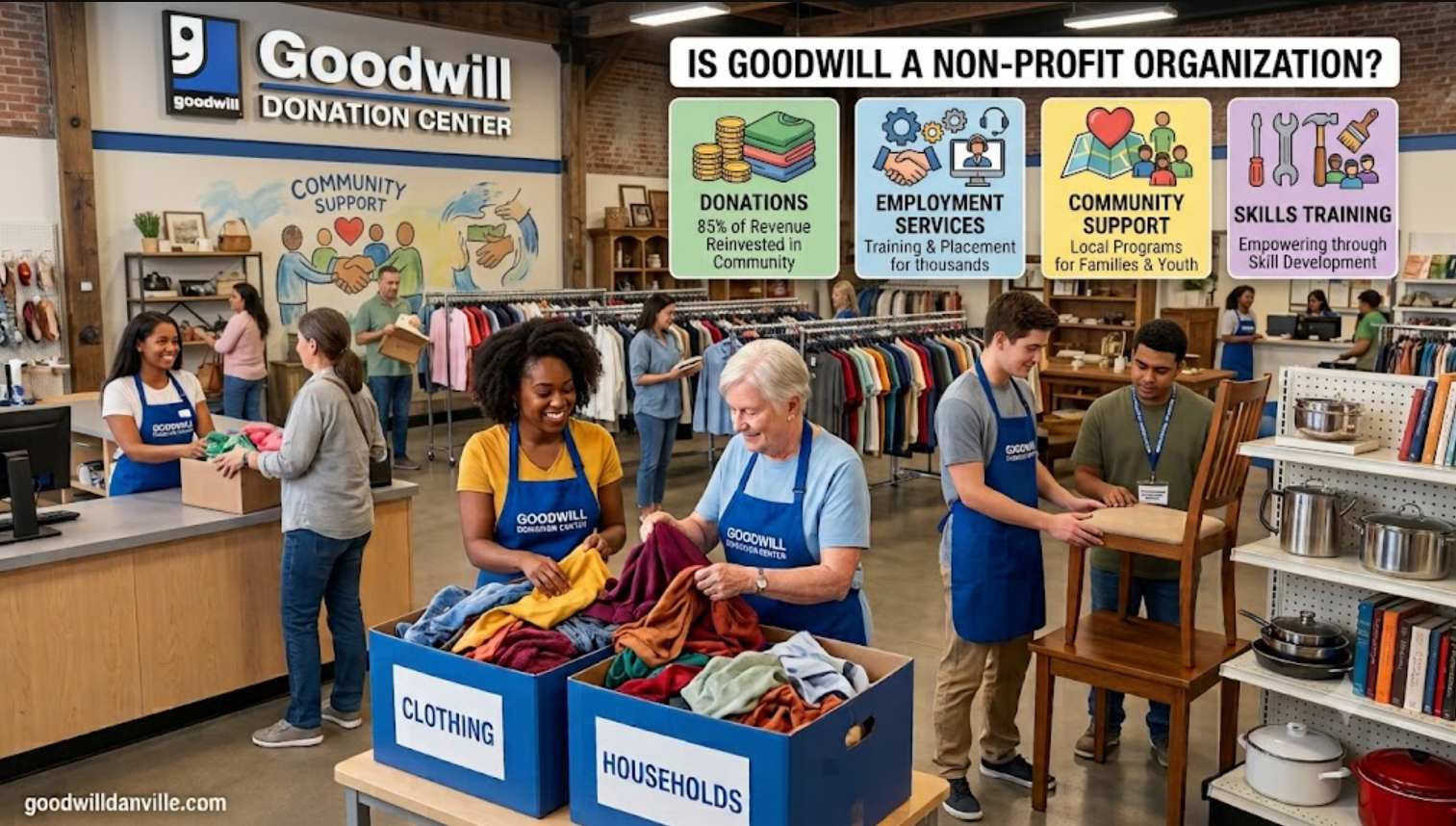
Introduction: Is Goodwill a Non-Profit Organization?
Many people recognize Goodwill stores as places where they can donate used clothing, furniture, electronics, and household items. However, a common question among donors and shoppers is: is Goodwill a non-profit organization? The answer is yes. Goodwill is a 501(c)(3) non-profit and tax-exempt organization that works to support communities by helping people overcome employment barriers and find meaningful job opportunities.
Unlike traditional businesses, Goodwill does not operate to generate profits for private owners or shareholders. Instead, revenue generated through its retail stores is reinvested into programs that provide job training, career assistance, skills development, and employment services.
Goodwill operates through a network of independent, community-based organizations rather than one single corporate structure. Each local Goodwill organization serves its own community while following the overall mission of creating employment opportunities and improving lives.
What Is Goodwill and How Does It Work?
Goodwill is one of the most recognized charitable organizations in North America. Its primary mission is to help individuals gain skills, prepare for employment, and connect with job opportunities.
Many people assume Goodwill is simply a thrift store chain, but its retail operations are only one part of a larger social mission. Donations collected at Goodwill stores are sold to generate funds that support local programs designed to help people build careers.
These programs may include:
- Job training and skill-building classes
- Resume preparation and career counseling
- Employment placement assistance
- Support for people facing barriers to employment
- Workforce development programs
The organization focuses on creating pathways to independence by helping individuals gain the confidence, knowledge, and skills needed to succeed in the workforce.
Is Goodwill a 501(c)(3) Non-Profit Organization?
Yes, Goodwill organizations are classified as 501(c)(3) non-profit organizations under the United States tax code. This means they are recognized as charitable organizations and qualify for tax-exempt status.
A 501(c)(3) organization must operate primarily for charitable, educational, religious, scientific, or similar purposes. Goodwill meets these requirements because its main purpose is community support through employment services and workforce development.
Being a non-profit organization does not mean Goodwill cannot earn money. Like many successful charities, Goodwill generates revenue through its operations. The important difference is that the money is used to support the organization’s mission rather than being distributed to private owners.
Does Goodwill Have Owners or Shareholders?
One important difference between Goodwill and a traditional company is that it does not have private owners or shareholders.
A typical corporation may distribute profits to investors, but Goodwill does not operate that way. Local Goodwill organizations are governed by community-based leadership structures, usually including volunteer boards of directors.
These boards help oversee:
- Organizational strategy
- Financial responsibility
- Community programs
- Mission-focused decisions
Because there are no private owners expecting financial returns, Goodwill directs its resources toward programs that benefit local communities.
How Does Goodwill Make Money?
Goodwill earns revenue primarily through its retail stores. When people donate clothing, furniture, appliances, and other household items, Goodwill sells many of these donated goods in its stores.
The money generated from these sales helps fund community programs and employment services.
The process generally works like this:
1. People Donate Items
Community members donate gently used goods to Goodwill locations. These donations reduce waste while providing resources that can support charitable programs.
2. Goodwill Sells Donated Goods
Items that meet quality standards are prepared and sold through Goodwill retail stores.
3. Revenue Supports Community Services
The income from store sales is reinvested into programs such as job training, career coaching, and employment assistance.
This model allows Goodwill to create a sustainable funding system while helping both donors and people seeking employment support.
Why Does Goodwill Operate Thrift Stores?
Goodwill thrift stores serve two important purposes. First, they provide affordable shopping options for communities. Second, they create a source of funding for Goodwill’s charitable programs.
The retail model also supports environmental sustainability by encouraging reuse and reducing the amount of usable goods that end up in landfills.
By donating unwanted items, individuals can support a cycle where those goods help fund services that benefit people looking for better employment opportunities.
Is Goodwill a Charity or a Business?
Goodwill is best described as a non-profit organization that uses business activities to support charitable goals.
Although Goodwill stores operate similarly to retail businesses—with employees, inventory management, and customer transactions—the purpose behind these activities is different.
A for-profit business usually focuses on generating financial returns for owners or investors. Goodwill focuses on generating resources to support its mission of helping people achieve employment success.
This combination of business operations and charitable services allows Goodwill to provide long-term community support.
Are All Goodwill Organizations the Same?
Goodwill is not controlled as one single nationwide company. Instead, it operates as a network of independent local organizations.
Each regional Goodwill organization typically:
- Has its own leadership team
- Manages its own operations
- Serves its local community
- Creates programs based on local needs
This structure allows different Goodwill regions to respond to the specific challenges and opportunities within their communities.
For example, one region may focus heavily on technology training, while another may provide specialized employment services for veterans, people with disabilities, or individuals returning to the workforce.
Where Does Goodwill Donation Money Go?
A common question is: where does Goodwill money go?
The revenue generated from donated goods generally supports Goodwill’s mission-driven programs. These services are designed to help individuals improve their employment opportunities and achieve greater financial independence.
Funding may support:
- Career development programs
- Vocational training
- Employment specialists
- Community outreach initiatives
- Workforce preparation services
The exact programs offered can vary depending on the local Goodwill organization and the needs of the community it serves.
Why Do People Donate to Goodwill?
Millions of people donate to Goodwill because their unwanted items can create a positive impact beyond simple recycling.
Donating to Goodwill can help:
- Provide resources for job seekers
- Support local employment programs
- Reduce household waste
- Give useful items a second life
- Strengthen community services
For many donors, the value comes from knowing their possessions can contribute to opportunities for others.
Final Thoughts: Is Goodwill a Non-Profit Organization?
So, is Goodwill a non-profit organization? Yes, Goodwill is a legitimate 501(c)(3) non-profit and tax-exempt organization dedicated to helping individuals overcome employment challenges.
Goodwill does not have private owners or shareholders. Instead, it operates through independent local organizations governed by community-based leadership. The money generated from retail stores is reinvested into programs that provide job training, career support, and employment opportunities.
While Goodwill uses retail stores as a source of revenue, its primary purpose is not profit generation—it is community impact. Through donations, shopping, and support of its programs, people contribute to an organization focused on creating pathways toward employment and independence.