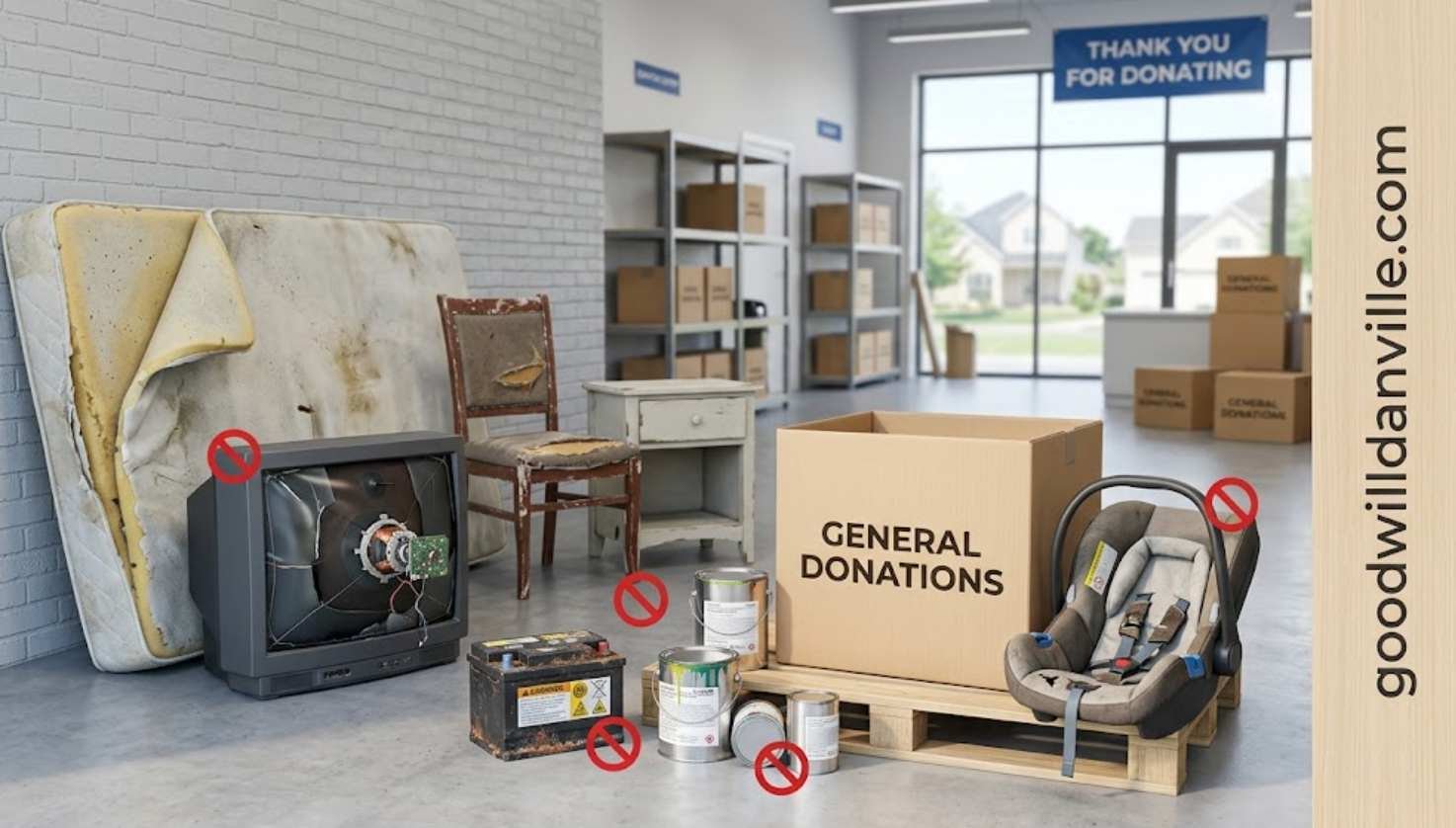
Donating unwanted belongings to Goodwill can be an easy way to clear space while giving usable items another life. However, not everything sitting in your garage, closet, or storage room belongs in a donation bin.
There are several things you should not donate to Goodwill, particularly items that are unsafe, damaged, difficult to resell, or restricted by local policies. Bringing unsuitable items may also create extra sorting and disposal work for the donation center.
One important point is that Goodwill locations do not all follow an identical acceptance list. Goodwill operates through regional organizations, so an item accepted in one area may be refused somewhere else.
Before loading your car, use this practical guide to decide what should stay out of your donation pile.
Quick Guide: What Should Stay Out of Your Goodwill Donation Box?
| Item Type | Better Option |
|---|---|
| Broken or heavily stained items | Repair, recycle, or dispose responsibly |
| Paint, fuel, pesticides, chemicals | Household hazardous-waste facility |
| Used mattresses or box springs | Mattress recycling program |
| Unsafe or recalled baby gear | Follow manufacturer or local disposal guidance |
| Car batteries and automotive waste | Auto-parts recycling facility |
| Very large appliances | Appliance recycler or local pickup service |
| Old CRT televisions | Electronics recycling center |
Think of the basic rule this way:
Usable + reasonably clean + safe = potentially donatable
Hazardous + broken + contaminated + unsafe = find another disposal option
1. Broken, Dirty, or Heavily Damaged Items
A donation should normally be something another person could realistically use.
Avoid donating furniture, clothing, appliances, or household goods that are severely:
- Broken
- Moldy
- Mildewed
- Torn
- Rusted
- Covered in pet waste or excessive animal hair
- Badly stained
- Missing important parts
Official Goodwill donation guidance advises donors not to give broken or soiled items and recommends cleaning clothing and testing electrical products before donation.
Before packing anything, it helps to follow a simple Goodwill donation preparation checklist so the items arrive clean, organized, and ready for evaluation.
A Simple Test Before Donating
Ask yourself:
“Would I feel comfortable giving this item directly to a friend?”
If the answer is no because it is dirty, unusable, or badly damaged, donation may not be the right option.
2. Hazardous Chemicals and Flammable Materials
Household hazardous waste should not be treated like ordinary thrift-store merchandise.
Examples can include:
- Gasoline
- Paint and paint thinner
- Pesticides
- Certain cleaning chemicals
- Propane or fuel products
- Toxic substances
These products can leak, ignite, contaminate other donations, or create health and environmental risks.
Instead, search for a household hazardous-waste collection facility operated by your city or county.
3. Mattresses, Box Springs, and Certain Bedding
Mattresses are a common source of confusion.
Many Goodwill organizations do not accept mattresses, although policies vary by location. Goodwill specifically notes that furniture and mattress acceptance can depend on the regional organization operating your local donation center.
Depending on local rules, restrictions may also apply to:
- Box springs
- Bed pillows
- Sleeper-sofa mattresses
- Air mattresses
Mattresses can create sanitation, storage, transportation, and resale problems, particularly when their condition cannot easily be verified.
Check your local policy before making the trip.
4. Unsafe or Recalled Baby Products
Use extra caution with products designed to protect babies and young children.
Items such as:
- Car seats
- Older cribs
- Safety gates
- Certain strollers
- Recalled baby equipment
may be restricted because safety requirements change and older products may no longer meet current standards.
Goodwill’s general donation guidance advises against donating products that have been recalled, banned, or do not meet current safety requirements.
For safety equipment such as car seats, recycling or manufacturer-supported disposal programs may be a better choice.
5. Large Appliances That Your Location Cannot Handle
Do not assume every donation center has space or equipment for large household appliances.
Depending on your regional Goodwill, restrictions may apply to items such as:
- Refrigerators
- Washing machines
- Dryers
- Dishwashers
- Full-size stoves
- Freezers
Goodwill does accept household goods and appliances generally, but local organizations determine their own donation rules.
For oversized appliances, call the location before transporting them. An appliance recycling program, scrap-metal facility, or municipal pickup service may be more appropriate.
6. Old CRT TVs and Difficult-to-Recycle Electronics
Modern electronics may sometimes be accepted, but older technology can be more difficult.
Large CRT televisions—the deep, heavy TVs commonly used before flat screens became standard—may be rejected by some locations because of their weight and specialized recycling requirements.
The same issue can apply to outdated or nonworking electronic equipment.
Always check local electronic-donation policies first rather than leaving an old television outside a donation center.
7. Automotive Waste and Vehicle Parts
A donation center is generally not the right disposal destination for automotive waste such as:
- Used tires
- Car batteries
- Automotive fluids
- Damaged rims
- Fuel
- Oil and similar liquids
Auto-parts retailers, tire shops, recycling centers, and municipal hazardous-waste programs are usually better equipped to process these materials.
8. Oversized Items That Are Difficult to Move or Resell
Some objects may still work perfectly but are simply impractical for a particular donation center.
Examples can include:
- Pianos
- Large organs
- Extremely heavy entertainment units
- Oversized furniture
- Commercial equipment
Acceptance depends heavily on storage capacity, staffing, transportation, and local resale demand.
Calling ahead can save you from loading a 300-pound item only to discover that the location cannot take it.
Check Before You Drive to Goodwill
Knowing what you are donating is only half of the preparation. You should also confirm when donations are being accepted.
Donation hours may differ from regular store hours. Read does Goodwill have different donation hours? and check what time Goodwill stops taking donations before making a late-day trip.
Weekend schedules can also differ, so these guides may help:
- Is Goodwill open on Saturday?
- Is Goodwill open on Sunday?
- What time does Goodwill open?
- When does Goodwill close?
Holiday schedules deserve extra attention as well. If you are planning a decluttering project around a holiday weekend, check whether Goodwill is open on Memorial Day or Goodwill is open on New Year’s Day before leaving home.
What Should You Do With Items Goodwill Cannot Accept?
A rejected donation does not automatically belong in the trash.
Depending on the item, try:
Recycling Centers
Useful for electronics, appliances, scrap metal, batteries, and some mattresses.
Household Hazardous-Waste Programs
Best for chemicals, paints, pesticides, fuels, and potentially dangerous liquids.
Specialized Charities
Some organizations accept furniture, building materials, medical equipment, or other goods that standard thrift stores cannot process.
Local Giveaway Groups
A bulky or unusual item may still be useful to someone nearby even when a donation center does not accept it.
Understanding how the Goodwill donation process works can also help you decide what belongs in your donation pile.
And if you have ever wondered where your usable donations go after drop-off, see what happens to items donated to Goodwill.
Final Takeaway
The most important things you should not donate to Goodwill are items that are unsafe, hazardous, badly damaged, contaminated, recalled, or difficult for your local center to handle.
But there is no single nationwide “never accepted” list that applies perfectly to every location. Goodwill consists of regional organizations with their own donation policies, so checking your local center before transporting mattresses, furniture, appliances, electronics, or other questionable items is always the safer approach.
A good donation should help the next person—not create an extra disposal problem for the donation center.