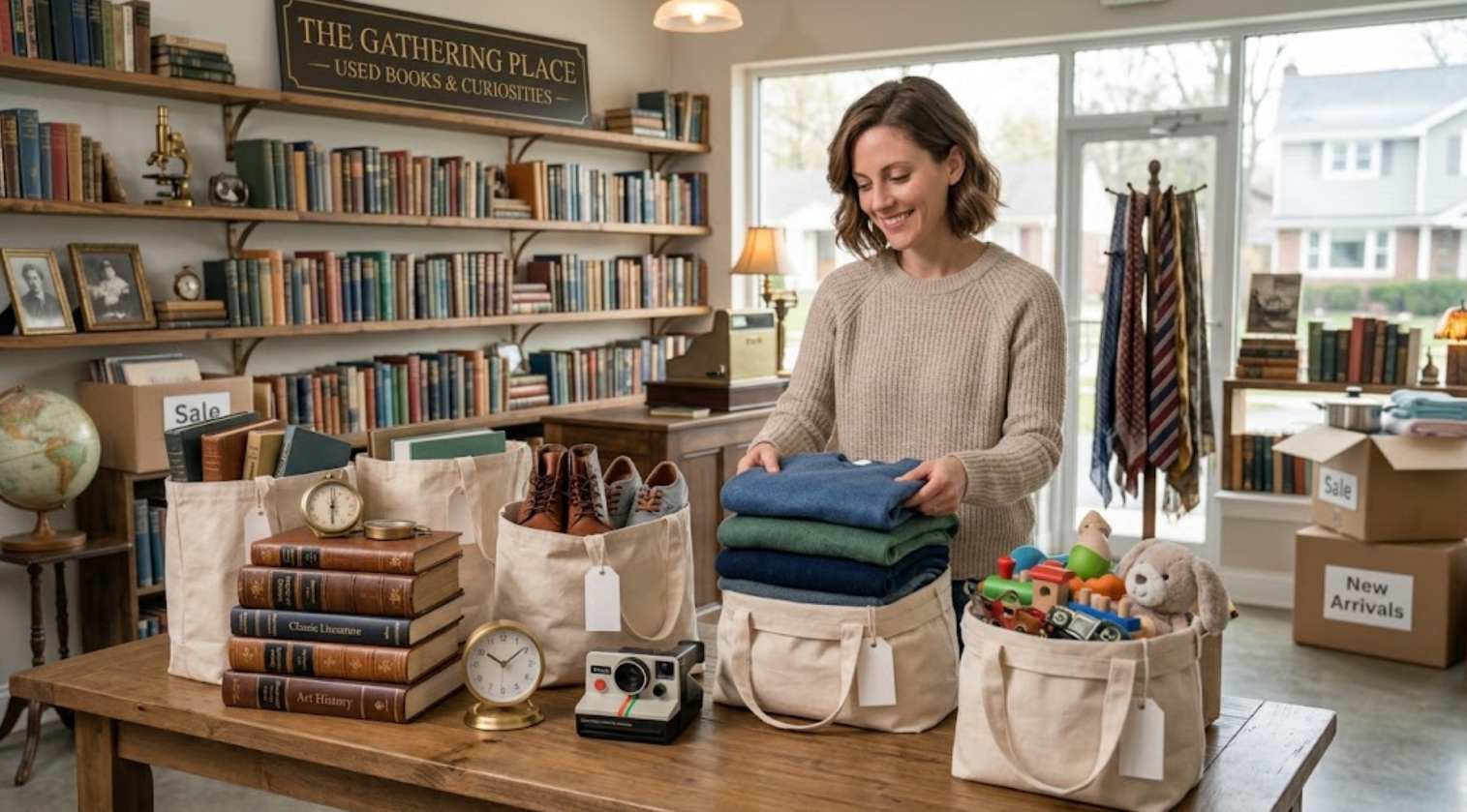
Cleaning out a closet, kitchen, garage, or spare room often leaves you with one question: What are the best things to donate to Goodwill?
A simple rule can help: donate items that are clean, usable, complete, and in good working condition. Clothing someone can still wear, kitchenware ready for another home, working electronics, books, and practical household goods are usually much better donation choices than damaged items that need repair or disposal.
Before filling your car with boxes, use this guide to decide what is worth donating and what may be better handled another way.
Quick Guide: Is This Item Worth Donating?
Think about your item from the next person’s point of view.
DONATE → Clean + Working + Complete + Reusable
CHECK FIRST → Electronics + Furniture + Baby Gear + Large Items
SKIP → Broken + Stained + Unsafe + Hazardous
If you would feel comfortable giving the item to a friend in its current condition, it is generally a better candidate for donation.
Local acceptance policies can differ, so checking the donation center’s rules before making a large trip is always helpful. You can also learn how Goodwill donation works before your first drop-off.
1. Gently Used Clothing and Shoes
Clothing is one of the easiest places to start when decluttering.
Consider donating:
- Shirts and blouses
- Jeans and pants
- Dresses
- Jackets and coats
- Children’s clothing
- Shoes and boots
- Handbags and accessories
Look at each piece before placing it in your donation bag. Clothing should ideally be clean and wearable, without major stains, strong odors, missing sections, or serious damage.
Seasonal clothing can also be useful. A winter coat taking up space in your closet may still have plenty of life left for someone else.
For a smoother drop-off, follow these simple tips on how to prepare items for a Goodwill donation.
2. Kitchenware and Small Appliances
Your kitchen may contain more donation-worthy items than you expect.
Extra pots, pans, mugs, plates, bowls, baking dishes, utensils, and glassware can all be practical secondhand items when they are clean and in usable condition.
Working small appliances may also be worth considering, including:
- Toasters
- Blenders
- Mixers
- Coffee makers
- Small food processors
Test electrical appliances before donating them. Include removable parts, cords, lids, and accessories whenever possible.
A blender without its pitcher or a coffee maker with a damaged cord is far less useful than a complete, functioning appliance.
3. Books, Games, and Media
Finished a book you probably will not read again? It may be a good addition to your donation box.
Books in reasonable condition are easy to sort and transport. Depending on your local Goodwill’s policies, other possibilities may include DVDs, vinyl records, video games, board games, and similar entertainment items.
For games, try to keep important pieces together.
Instead of throwing everything into one box, organize related items first. That small effort can make your donation easier to handle.
4. Home Décor That Still Looks Good
Home décor is another useful category to check while decluttering.
Possible donations include:
- Framed artwork
- Mirrors
- Lamps
- Decorative baskets
- Vases
- Candle holders
- Seasonal decorations
- Small storage pieces
Ask yourself whether the item still looks presentable enough to be displayed in another home.
An outdated style is not necessarily a problem. A cracked frame, broken lamp, or badly damaged decoration is.
5. Small, Manageable Furniture
A nightstand you no longer need or a small shelf that does not fit your new room may still be useful to someone else.
Small furniture can be worth donating when it is sturdy, clean, and easy to handle. Accent chairs, side tables, shelving units, and similar pieces are good examples to consider.
Furniture acceptance, however, can differ between locations. Large or damaged furniture should not automatically be loaded into your vehicle without checking first.
If you are planning your trip, it also helps to know what time Goodwill stops taking donations because store and donation-center schedules may not always be identical. In fact, Goodwill can have different donation hours depending on the location.
6. Working Electronics
Some electronics can make useful donations when the local location accepts them.
These may include laptops, tablets, computer accessories, monitors, televisions, keyboards, speakers, and similar devices.
Do not assume every electronic item will be accepted everywhere. Check local requirements first, especially for older or larger electronics.
Before donating a computer, tablet, or another device containing personal information, remove your accounts and personal data.
What Should You Avoid Donating to Goodwill?
Being generous does not mean everything should go into the donation pile.
Broken, Dirty, or Heavily Damaged Items
Avoid treating a donation center as a disposal service.
Items with major stains, severe tears, mold, missing essential parts, or damage that makes them unusable are poor candidates for donation.
Hazardous Materials
Paint, chemicals, fuels, and other hazardous materials require appropriate disposal methods and should not simply be included with ordinary household donations.
Safety-Sensitive Products
Items such as used car seats, cribs, and certain baby products can be subject to recalls, changing safety standards, or local restrictions.
Always check the specific location’s current acceptance rules instead of assuming these products can be donated.
Plan Your Donation Before Leaving Home
A few minutes of planning can prevent an unnecessary trip.
First, sort and inspect your items. Next, confirm that your local donation location accepts anything unusual or oversized. Finally, check the operating schedule.
If you are going early, find out what time Goodwill opens. If you prefer a later visit, check when Goodwill closes before leaving.
Weekend schedules are worth checking separately. See whether Goodwill is open on Saturday or Goodwill is open on Sunday when planning a weekend cleanout.
Holiday hours can change as well. For example, check availability before visiting Goodwill on Memorial Day or Goodwill on New Year’s Day.
A Better Way to Think About Your Donation
The best things to donate to Goodwill are not necessarily your most expensive belongings. They are items that still have practical use.
A clean jacket, complete cookware set, working blender, good book, or sturdy nightstand may deserve another life instead of sitting unused in your home.
Take a few moments to clean, test, and organize what you plan to give. And if you have ever wondered where those items go afterward, read about what happens to items donated to Goodwill to understand the donation process beyond the drop-off point.
The goal is simple: donate something another person could realistically use, wear, read, display, or enjoy.