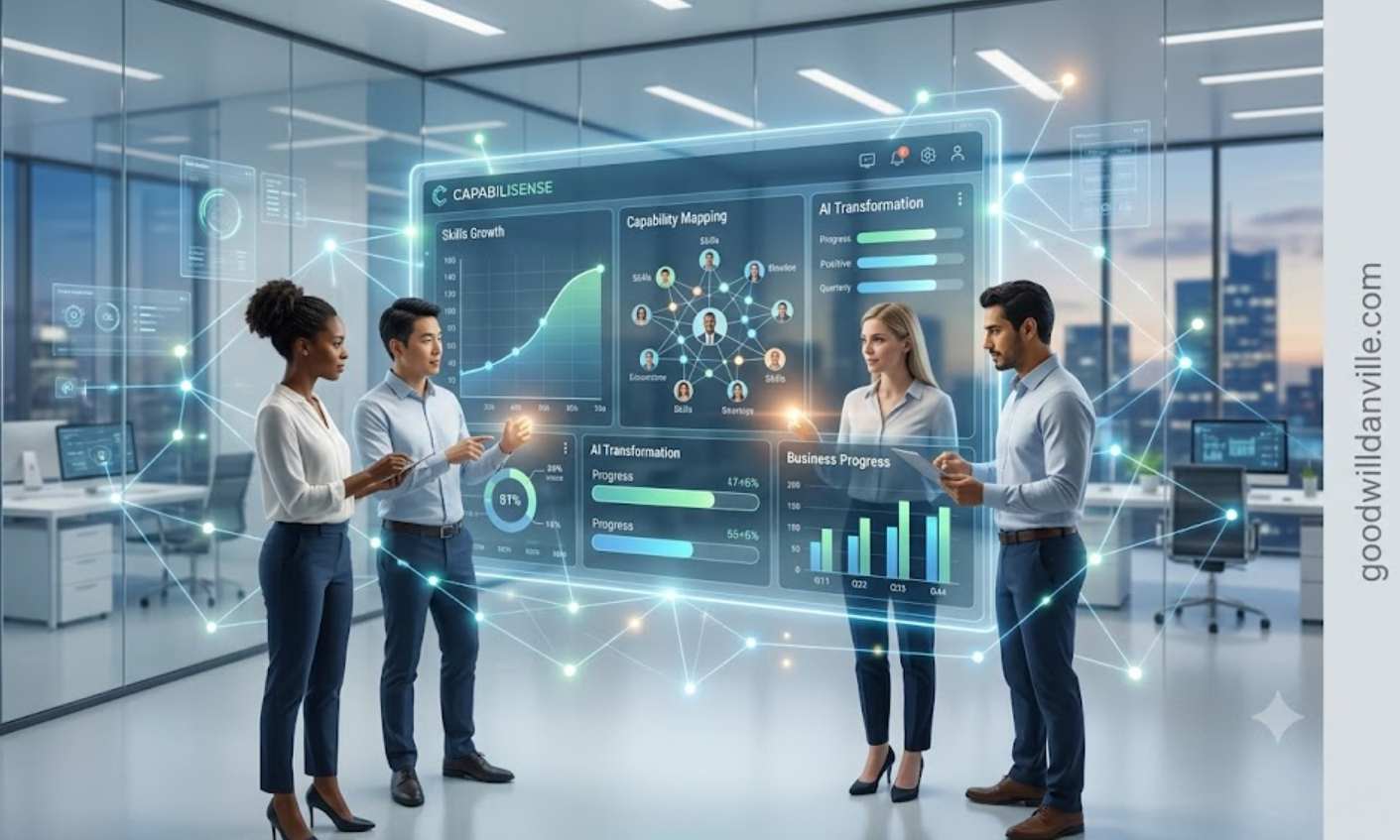
Introduction: Why I’m Building CapabiliSense
The question behind why I’m building CapabiliSense comes from a simple but important observation: organizations do not fail because they lack technology, ambition, or resources. They often fail because the people responsible for turning those ambitions into reality are left without clarity, direction, and measurable growth paths.
Across industries, companies invest billions into digital transformation, artificial intelligence, cloud adoption, and operational improvements. Yet many of these large-scale initiatives struggle to deliver the expected results. The challenge is rarely just the technology itself. The deeper challenge is human alignment.
CapabiliSense is being built to solve this overlooked problem: helping people understand how big organizational goals translate into meaningful daily actions, measurable skills, and real progress.
The purpose is not to add another layer of complexity to transformation. It is to make transformation understandable, practical, and achievable for every person involved.
The Real Reason Transformations Fail: The Human Factor
Large-scale transformations are often presented as technology projects. Organizations focus heavily on platforms, software, infrastructure, automation, and investment plans. While these elements matter, they represent only one part of the equation.
The biggest barrier is often the human experience behind the change.
Employees frequently find themselves asking:
- “How does this strategy affect my role?”
- “What exactly should I do differently tomorrow?”
- “Do I have the skills needed to succeed in this new environment?”
- “Is this transformation creating value, or is it just additional work?”
When employees cannot connect their daily responsibilities with the company’s larger vision, transformation becomes a disconnected initiative rather than a shared mission.
CapabiliSense exists because successful transformation requires more than a strategy document. It requires every individual to understand their role, develop the right capabilities, and see measurable progress.
Why Current Transformation Approaches Are Not Enough
Traditional transformation programs often focus on planning, timelines, technology implementation, and executive goals. However, they frequently overlook the most important question:
How do we enable every person to contribute effectively to the change?
A company can have:
- A strong vision
- Advanced technology
- Significant financial investment
- Experienced leadership
But if employees do not know what actions to take, where their skills need improvement, or how their progress is measured, the transformation loses momentum.
The gap between corporate strategy and individual execution is where many initiatives fail.
CapabiliSense was created to bridge this gap.
Turning Corporate Vision Into Daily Action
One of the core ideas behind CapabiliSense is making transformation actionable.
A corporate vision is often inspiring but too broad. Statements such as “become AI-driven,” “modernize operations,” or “increase digital maturity” describe where an organization wants to go, but they do not always explain how people should get there.
CapabiliSense focuses on answering practical questions:
- What actions should employees take today?
- What skills are required for future success?
- What obstacles are slowing progress?
- How can individuals and teams continuously improve?
By connecting strategic goals with everyday behaviors, organizations can move from simply announcing transformation to actually achieving it.
The Three Core Goals of CapabiliSense
1. Creating Clear and Actionable Steps
The first goal of CapabiliSense is clarity.
People perform better when they understand expectations, priorities, and the path forward. Instead of leaving employees with abstract transformation goals, CapabiliSense helps translate those goals into clear actions.
This creates alignment between:
- Organizational strategy
- Team objectives
- Individual responsibilities
When people understand what success looks like and what steps they can take, transformation becomes something they participate in rather than something that happens around them.
2. Identifying Skill Gaps and Transformation Barriers
Every transformation requires new capabilities.
As industries evolve through AI, automation, and digital innovation, organizations need to understand where their people are today and where they need to grow.
CapabiliSense helps identify:
- Missing skills
- Capability gaps
- Areas of friction
- Challenges preventing progress
Without this understanding, organizations may invest heavily in solutions while overlooking the human capabilities required to use those solutions effectively.
Finding these gaps early allows companies to provide targeted development and create stronger transformation outcomes.
3. Measuring Real Growth and Capability Evolution
Traditional performance evaluations often focus on general feedback and past results. However, transformation requires a different approach.
Organizations need to understand how capabilities are developing over time.
CapabiliSense focuses on measurable growth by helping track:
- Skill improvement
- Competency development
- Progress toward strategic goals
- Individual and team capability evolution
Growth should not remain an abstract idea. It should become something organizations can observe, understand, and improve.
Building a Future Where People Are the Center of Transformation
Technology continues to advance rapidly. Artificial intelligence, automation, and digital platforms are changing how organizations operate.
However, technology alone cannot create successful transformation.
People create transformation.
The organizations that succeed will not necessarily be those with the most advanced tools. They will be those that know how to empower their people to adapt, learn, and contribute.
CapabiliSense is built around this belief: every person should understand their place in transformation and have the tools to grow into future opportunities.
A New Approach to Organizational Capability
The future of work requires continuous learning and adaptation. Companies can no longer rely only on occasional training programs or annual reviews.
Capability development must become continuous.
CapabiliSense aims to create a more intelligent approach where organizations can:
- Understand workforce capabilities
- Connect people with strategic goals
- Identify development opportunities
- Create measurable improvement pathways
This approach transforms capability building from a reactive process into a strategic advantage.
Conclusion: The Mission Behind CapabiliSense
The reason I’m building CapabiliSense is simple: transformation succeeds when people succeed.
Organizations do not transform through technology alone. They transform when every person understands the mission, knows their role, develops the necessary skills, and can see meaningful progress.
CapabiliSense exists to close the gap between vision and execution.
It is designed to help organizations move beyond vague transformation goals and create a future where change is clear, measurable, and human-centered.
Because the future of transformation is not only about what companies build.
It is about what people are capable of becoming.