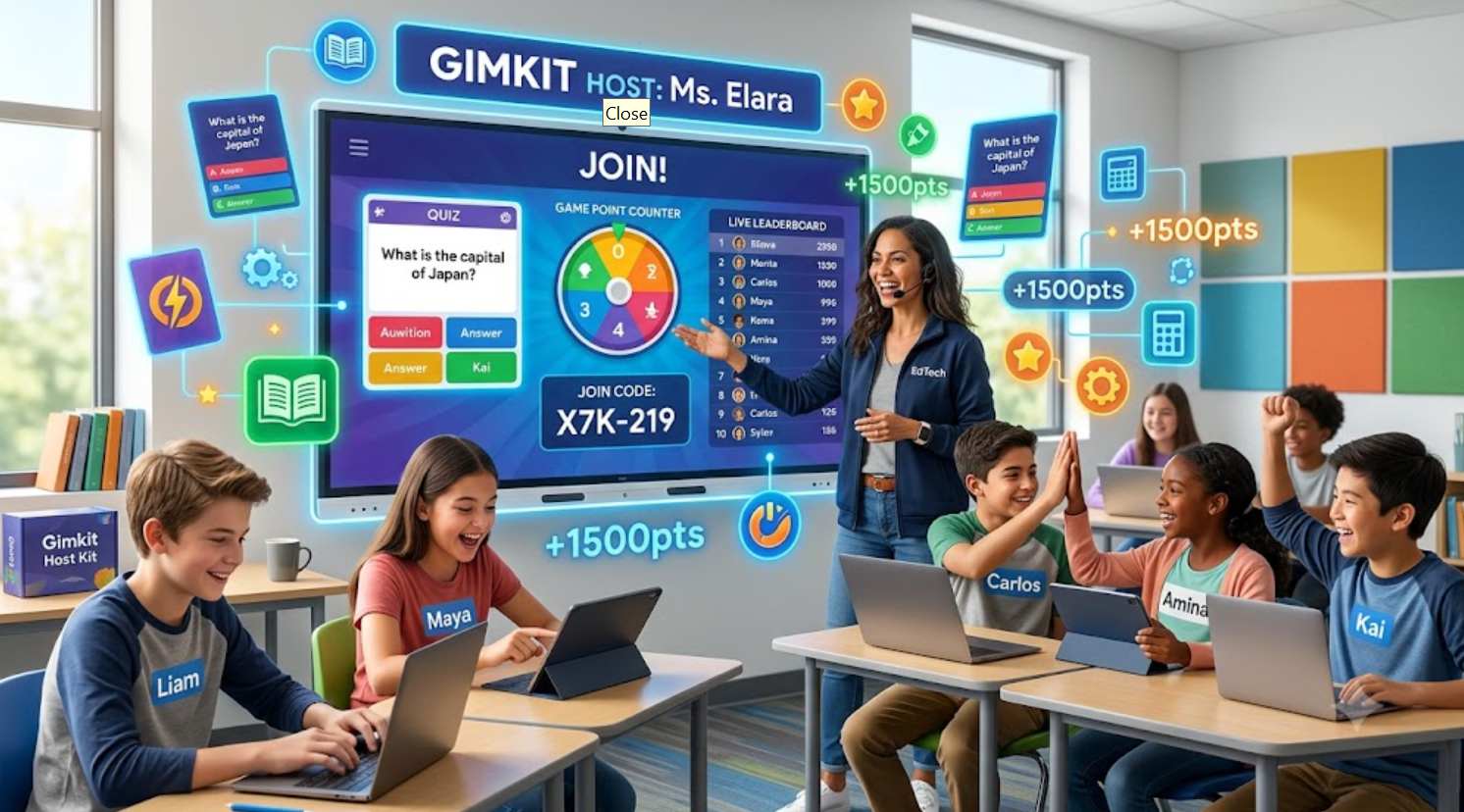
Introduction: What Is a Gimkit Host?
A Gimkit host is the person responsible for creating, managing, and running a live Gimkit game session. Usually, the host is a teacher, educator, or instructor who uses Gimkit to make classroom learning more interactive through quizzes, challenges, and game-based activities.
Unlike traditional quizzes, Gimkit combines learning with strategy, rewards, and competition. A teacher can create a quiz set (called a Kit), choose a game mode, customize settings, and invite students to join using a unique game code.
Whether you are a teacher looking to increase classroom engagement or a student trying to understand how Gimkit sessions work, learning how to become an effective Gimkit host can help you get the most out of this educational platform.
This guide explains everything you need to know about hosting a Gimkit game, from setup to launching your first live session.
What Is Gimkit and How Does Hosting Work?
Gimkit is an online learning platform designed to turn quizzes into interactive experiences. It allows educators to create question sets and host live games where students answer questions while earning virtual money and upgrades.
The role of a Gimkit host is more than simply starting a quiz. The host controls:
- The quiz content
- Game mode selection
- Time limits
- Player settings
- Game goals
- Classroom participation
- Overall learning experience
During a live session, students join using a game code provided by the host. Once everyone has entered the lobby, the host starts the game and monitors progress.
How to Become a Gimkit Host: Step-by-Step Guide
Hosting a Gimkit game is a simple process, even for beginners. Follow these steps to start your first live classroom session.
Step 1: Create or Log In to Your Gimkit Account
The first step for any Gimkit host is accessing a Gimkit account.
Visit the Gimkit website and sign in using your existing account. If you are new to the platform, create an account and complete the basic setup process.
Teachers usually create accounts to manage quizzes, track student progress, and organize classroom activities.
Once logged in, you will arrive at your dashboard where you can access your existing Kits or create new ones.
Step 2: Select a Kit for Your Live Game
A Kit is the quiz or question set that students will use during the game.
From your Gimkit dashboard:
- Browse your available Kits.
- Select the quiz you want to use.
- Open the Kit options.
- Choose the option to start a live game.
A good Gimkit host chooses questions that match the students’ learning level and lesson objectives.
For example:
- A science teacher may create a Kit about biology terms.
- A history teacher may create a Kit about important events.
- A language teacher may create vocabulary questions.
Well-designed Kits make the game more educational and enjoyable.
Step 3: Choose a Gimkit Game Mode
After selecting your Kit, the next step is choosing a game mode.
Gimkit provides different modes that change how students interact with the quiz.
Some popular options include:
Classic Mode
Classic mode provides a straightforward quiz experience. Students answer questions individually while earning rewards based on their performance.
This mode works well for:
- Review sessions
- Homework checks
- Test preparation
2D and Interactive Game Modes
Some Gimkit modes include interactive environments where students move through a virtual world while answering questions.
These modes are useful for increasing engagement because students feel like they are participating in a game rather than completing a normal quiz.
A skilled Gimkit host chooses a mode based on the classroom goal.
Step 4: Customize Your Game Settings
Before starting the session, Gimkit allows hosts to adjust different settings.
Depending on the selected mode, you may be able to customize:
- Game goals
- Time limits
- Player options
- Nickname settings
- Question order
- Power-ups and upgrades
These settings allow teachers to create the right balance between competition and learning.
For younger students, a teacher may prefer simpler settings. For older students, more challenging options can create a more competitive experience.
After adjusting the settings, continue to the game lobby.
Step 5: Share the Gimkit Join Code
Once your live game lobby opens, Gimkit provides different ways for students to join.
A Gimkit host can share:
- A unique game code
- A QR code
- A direct joining link
Students typically enter the code through the Gimkit join page.
The host should make sure all students successfully enter the lobby before starting.
Helpful classroom tips:
- Display the code on a projector or smart board.
- Ask students to use appropriate usernames.
- Check the player list before launching the game.
Step 6: Start the Gimkit Game
When all participants are ready, the host can click the Start Game button.
During gameplay, the host can monitor:
- Student participation
- Progress
- Scores
- Learning performance
The goal is not only competition but also helping students understand the material.
A great Gimkit host uses the results to identify topics that students understand and areas where they need additional support.
Tips for Becoming a Better Gimkit Host
Hosting a game is easy, but creating an effective learning experience requires preparation.
Here are some useful tips:
1. Prepare Questions Before Class
Avoid creating questions at the last minute. A well-organized Kit improves the quality of the session.
Make sure questions are:
- Accurate
- Clear
- Related to the lesson
- Appropriate for the student level
2. Choose the Right Game Mode
Different classrooms have different needs.
For quick reviews, Classic Mode may work best.
For engagement-focused activities, interactive modes may provide better results.
The best Gimkit host understands that the game mode should support the learning objective.
3. Explain Rules Before Starting
Before launching the game, explain:
- How students earn points
- How upgrades work
- Expected behavior
- How the activity connects to learning
Clear instructions prevent confusion and help students focus.
4. Use Gimkit Results for Improvement
After the game ends, review student performance.
The results can help identify:
- Common mistakes
- Difficult concepts
- Students who need additional help
A Gimkit session should not end when the game finishes. The data can guide future teaching decisions.
Common Problems Gimkit Hosts Face and How to Fix Them
Even experienced hosts may experience occasional issues.
Students Cannot Join the Game
Possible solutions:
- Confirm the join code is correct.
- Make sure students have a stable internet connection.
- Refresh the joining page.
The Game Feels Too Competitive
Some students may focus more on winning than learning.
Solutions:
- Explain that the goal is improvement.
- Use cooperative game modes when appropriate.
- Discuss answers after the session.
Technical Issues During Gameplay
If problems occur:
- Check the internet connection.
- Restart the browser.
- Ask students to reconnect.
Preparing a backup activity can also help teachers handle unexpected problems.
Why Gimkit Hosting Is Popular in Modern Classrooms
Game-based learning has become increasingly popular because it encourages active participation.
Traditional quizzes often feel like tests, but Gimkit transforms assessment into an interactive experience.
A successful Gimkit host can create:
- Higher student engagement
- More classroom participation
- Better review sessions
- Immediate feedback
- A fun learning environment
Students often become more motivated because they receive instant results and rewards while practicing important concepts.
Frequently Asked Questions About Gimkit Host
What does a Gimkit host do?
A Gimkit host creates and manages a live game session. The host selects the Kit, chooses a game mode, adjusts settings, shares the join code, and starts the game.
Can students host a Gimkit game?
Yes, students may be able to host games depending on their account type and permissions. However, teachers are usually the primary hosts because they create and manage educational content.
How do students join a Gimkit host session?
Students join by entering the game code provided by the host. They can usually access the session through Gimkit’s joining page.
Is Gimkit free for hosting games?
Gimkit offers different account options. Some features may be available for free, while advanced tools may require a paid plan.
What makes a good Gimkit host?
A good Gimkit host prepares quality questions, chooses appropriate game settings, explains instructions clearly, and uses game results to improve learning.
Final Thoughts
Becoming a successful Gimkit host is about more than pressing the start button. The best hosts create meaningful learning experiences by combining well-designed quizzes, smart game settings, and effective classroom management.
Whether you are teaching a new topic, reviewing for an exam, or simply looking for a more engaging way to practice knowledge, Gimkit provides a flexible platform for interactive learning.
With proper preparation and the right approach, any educator can use Gimkit to transform ordinary quizzes into memorable classroom experiences.